

HAVRE DE GRACE DECOY MUSEUM EXHIBITS
 WHAT IS A DECOY
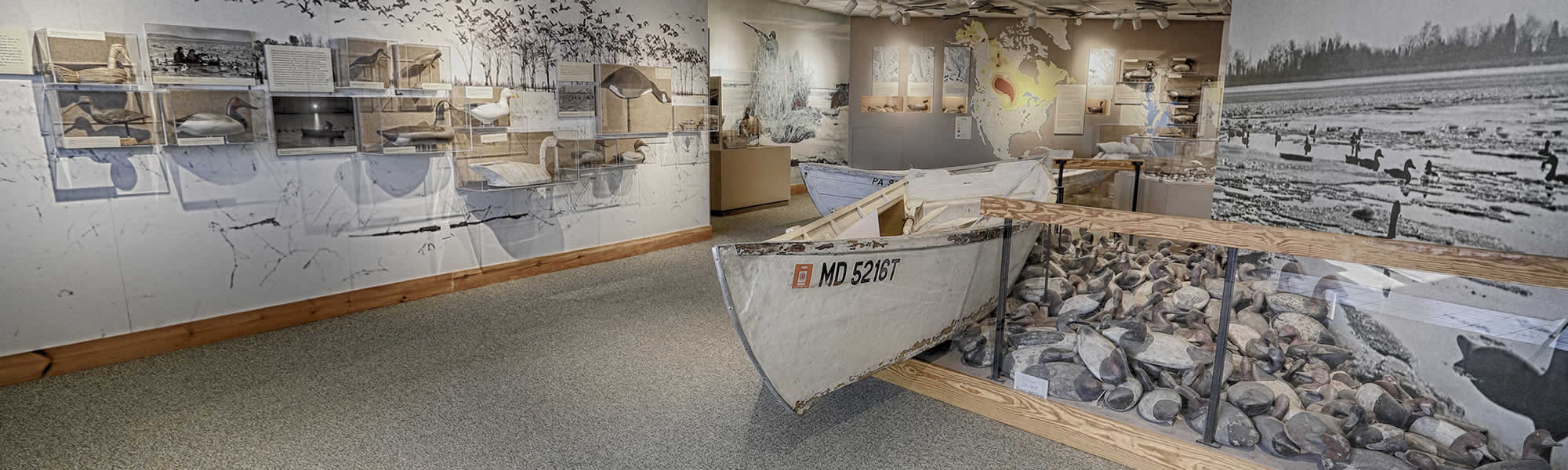
The Museum’s main gallery exhibit “What is a Decoy?” tells the story of an American folk art tradition, recounts how talented men carve “floating sculpture”, and contains examples of working decoys from various flyway regions and why the public has come to appreciate what made Havre de Grace the “Decoy Capital of the World.”
 INFLUENCES OF AFRICAN AMERICANS ON DECOY MAKING
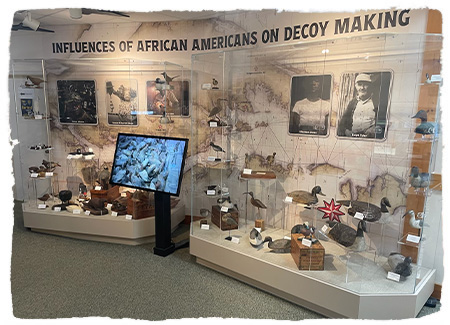
Influences of African Americans on decoy making is a celebration of the influences of both vintage and contemporary carvers of African American heritage.
 GUNNING THE FLATS
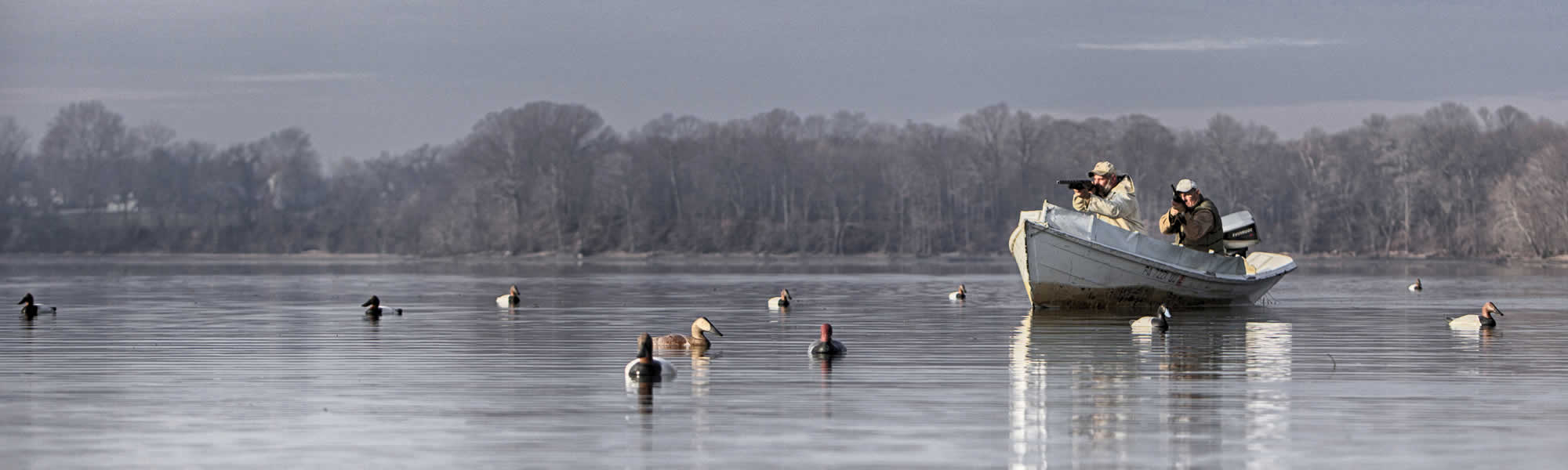
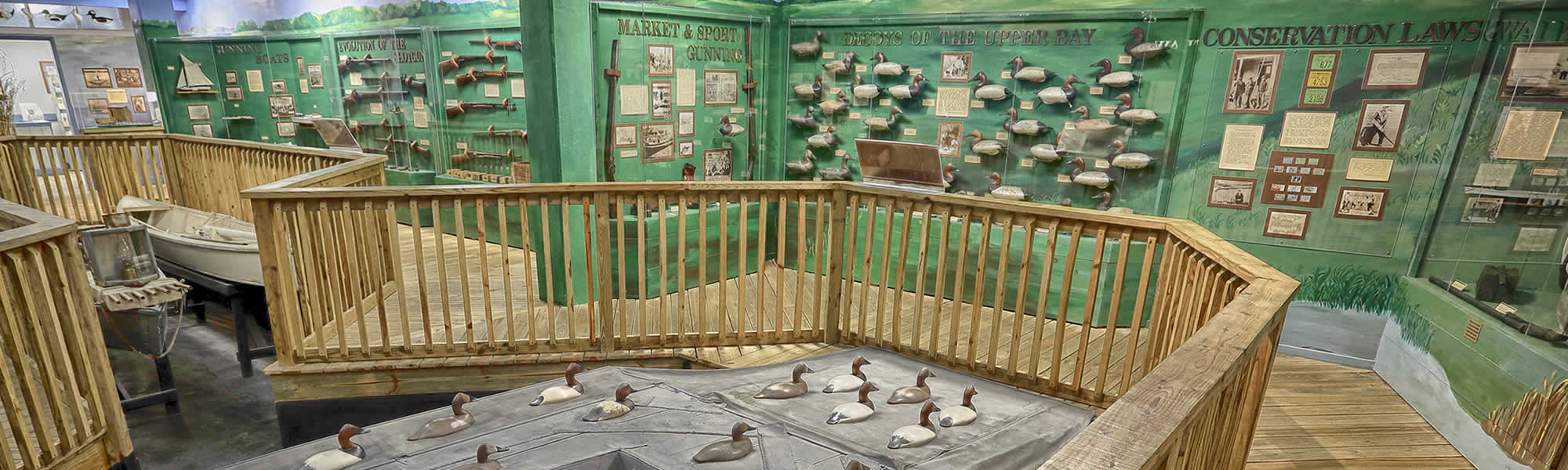
“Gunning the Flats” explores the history of waterfowling on the Susquehanna Flats, an area long noted for its bounty of waterfowl. By the nineteenth century, sportsmen from all over the world came to the Flats to pursue canvasback ducks, and many of Havre de Grace’s citizens supported their families by hunting waterfowl and selling them to Baltimore and Philadelphia restaurants. This exhibit places decoys within their historical context by investigating the tools and techniques used by local hunters throughout the past two centuries for both market and sports hunting.
 JOHN ‘DADDY’ HOLLY – PIONEER OF THE HAVRE DE GRACE STYLE
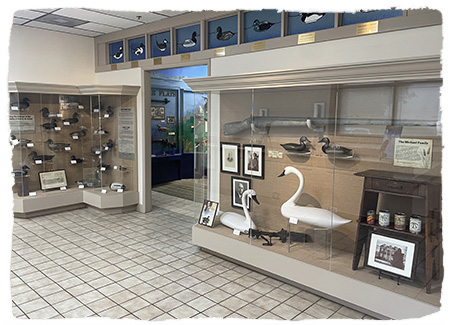
The pioneer of the Havre de Grace style this exhibit features the works of John ‘Daddy” Holly and the Holly Family. Phase 1 of this exhibit was completed in 2025 and phase 2 is under construction and should be completed by the end of 2026.
 CARVERS GALLERY
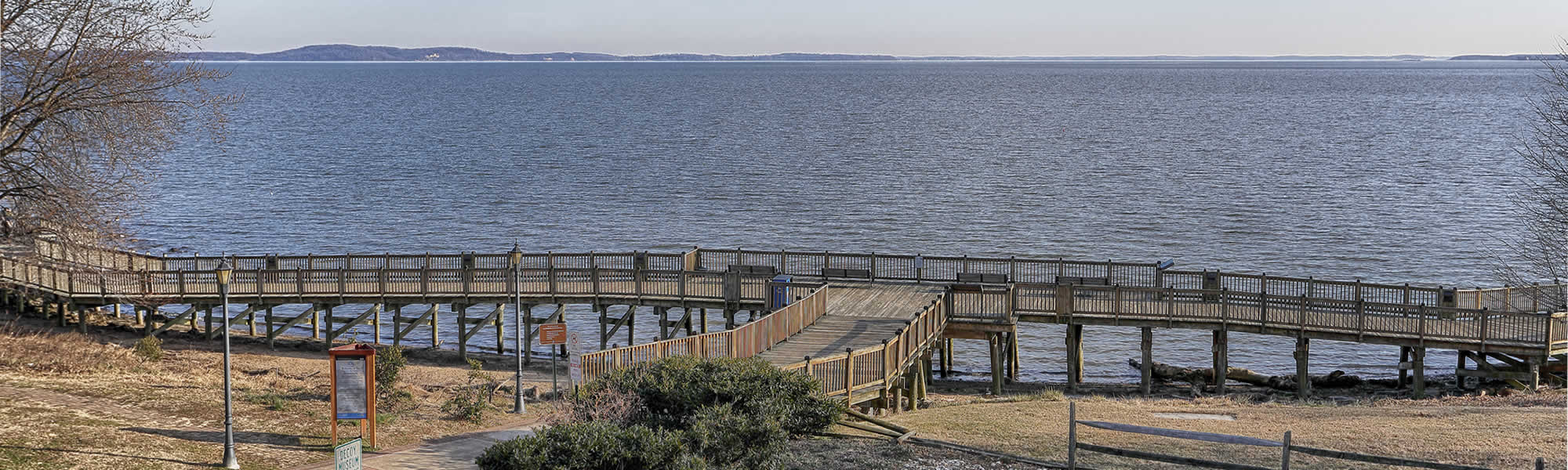
The Decoy Museum recognizes the extraordinary achievements of prominent carvers by naming an Honorary Chairman for its annual festival. The Carvers Gallery presents these masterpieces. Occupying the entire second floor gallery, this exhibit displays a full range of the works of masters such as Steve and Lem Ward, Charlie Bryan, Bob Litzenberg, Paul Gibson, Evans McKinney, and others. Our Carvers Gallery allows visitors to analyze and compare the styles of the area’s great carvers while enjoying the incredible vista of the Susquehanna Flats from the second floor gallery.
 R. MADISON MITCHELL CARVING WORKSHOP
* open only by appointment
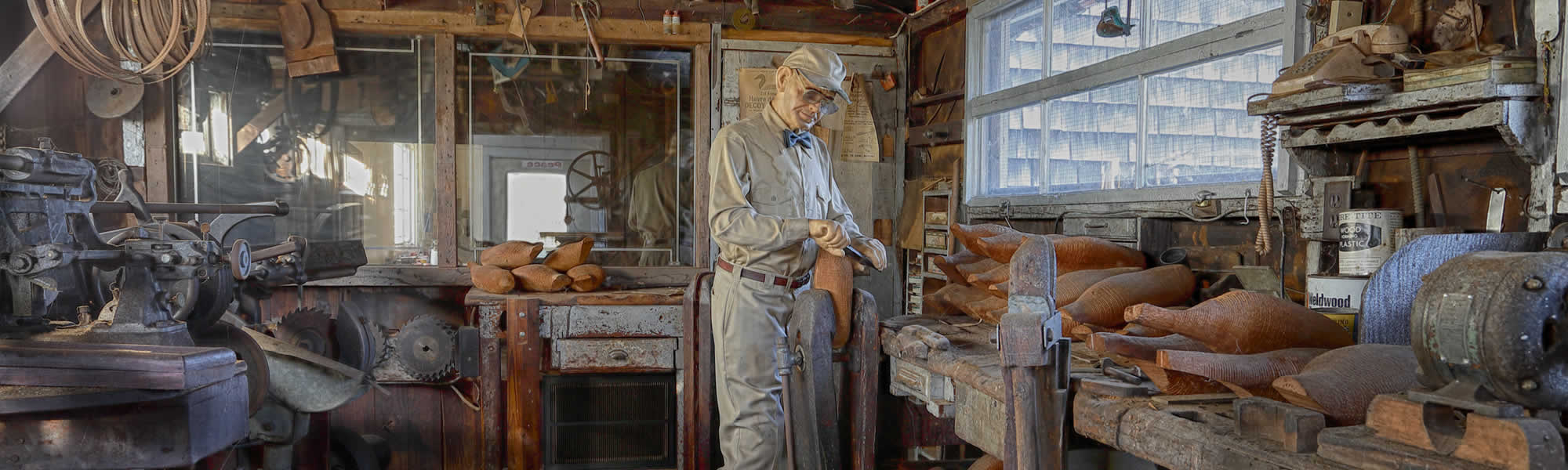
R. Madison Mitchell (1901-1993) is universally recognized as one of the masters of the Havre de Grace style of decoy carving. His simple yet elegant style dominated the decoy market for most of the second half of the 20th century and continues to be reflected today in the works of the many carvers who trained with him. The Decoy Museum is honored to exhibit Mr. Mitchell’s original workshop exactly as it appeared during his lifetime.
HAVRE DE GRACE DECOY MUSEUM TEMPORARY EXHIBITS
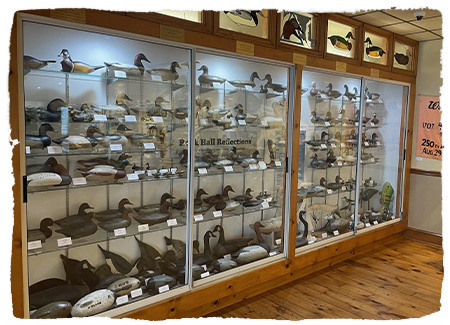 ROCK HALL REFLECTIONS
A celebration of John Glenn, the men he inspired, and the colorful decoys they made.
Forty miles south of Havre de Grace in Kent County, Maryland is the waterfront town of Rock Hall. Once home to a major fishing and seafood processing industry, today the town is a popular destination for boaters and tourists. When farmer and waterman John Bennett Glenn (1872-1951) started making decoys for his own use around 1916, he unknowingly launched what would come to be known as the “Rock Hall School” of decoy making. Glenn went on to mentor and inspire four generations of Rock Hall men to try making their own hunting decoys and decorative carvings – men like Jess Urie, August Heinefield, Roger Urie, Cliff Simms and Bob Lord. This exhibit showcasing the quality and variety of decoys and decorative carvings from this historic and vibrant community is now open at the Havre de Grace Decoy Museum.
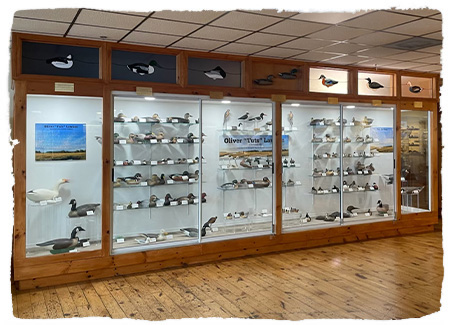 OLIVER “TUTS” LAWSON
Carrying on the Crisfield Tradition
Crisfield, Maryland has produced a plethora of decoy talent over the years, including famed carvers such as Lloyd Sterling, Lloyd Tyler, and the Ward Brothers. Carrying on this tradition of excellence is Oliver Lawson. Lawson spent his youth in the marshes of the Eastern Shore. As he grew older, he took up duck hunting, first with decoys supplied by his hunting partners, and eventually with decoys he had carved himself. Lawson developed a friendship with the Ward Brothers early in his carving career and would study under them. From here, Lawson’s career blossomed, with his decoys being lauded as excellent examples of Crisfield’s style of folk-art classics.
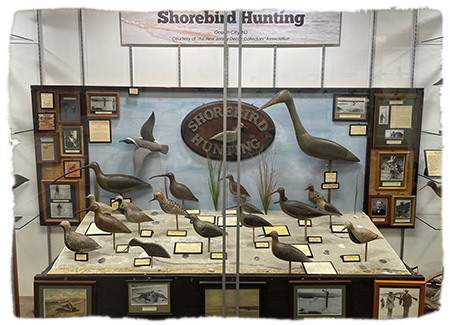 SHOREBIRD HUNTING
When Bob Seabrook was a young boy, his grandmother told him many stories about her family’s summers at “Cedar Beach” on the sound end of Ocean City, New Jersey. One of Bob’s favorite stories involved her father, Jacob Elwell, hunting on the beach and marshes near 56th Street. Eventually, Bob’s passions led him to a local New Jersey decoy collector where he purchased a yellowlegs that once belonged to Corneilus Nickerson, Captain of the U. S. Life Saving Station at 58th street in Ocean City. It turned out this shorebird was made by Harry Mitchell Shourds – son of Harry Vinuckson Shourds, both from Ocean City. Bob’s collection would continue to grow when an old friend gave Bob a group of “flattie” shorebirds that belonged to her father, a summer resident of south Ocean City. Bob purchased much of his collection from collectors and auctions. Shorebirds included in this exhibit come from Ocean, Atlantic, and Cape May Counties in New Jersey
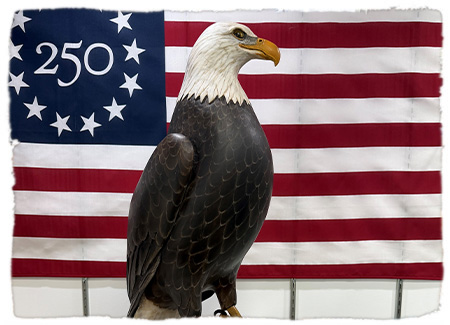 THE BALD EAGLE
In Celebration of the 250th Anniversary of the Declaration of Independence
250 years ago, the Declaration of Independence was adopted on July 2nd, 1776. It was subsequently signed as delegates came and went from the second Continental Congress. The United States of America came into being and adopted the Bald Eagle as one of its national symbols. This exhibit features eagles by vintage and contemporary carvers in celebration of the 250th anniversary of the Declaration of Independence and explores how the Bald Eagle became one of America’s national symbols. This celebration of America’s national bird is now on display at the Havre de Grace Decoy Museum